Description
The Redbud’s beauty extends well beyond the spring season, as the fading flowers give way to heart-shaped green to bronze leaves in summer and brown pods that remain on the tree after the leaves fall. These attributes, along with the redbud’s compact size and resilient nature, have made it one of the most popular small trees for residential gardens and an ideal complement to a pollinator garden.
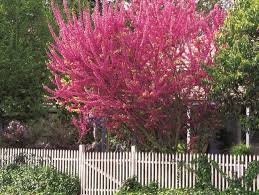
 Clusters of tiny magenta buds swell into showy rosy pink flowers in early spring before the leaves appear, with the long-lasting blossoms putting on a show for two to three weeks. The buds appear to emerge right from the bark of twigs and branches and even on parts of the trunk, adorning the entire tree with miniature clusters of flowers.
Flowers bloom before leaves emerge, providing an important early source of pollen for bees. Leaves are used by leaf cutter bees to create nests.
The trunk of the redbud commonly divides close to the ground, creating an interesting multi-trunk shape with graceful arched branches and a rounded crown.
 Heart-shaped leaves 2 to 6 inches in length emerge a reddish color, turning dark green in summer and then a bright canary yellow in autumn.
Technically, the Redbud belongs to the legume family. The flowers give rise to clusters of beanlike pods that remain on the tree into winter.
| Eastern Redbud Facts and Features | |
| Mature Size | Medium 8 m (26 ft) |
| Sun/Shade | Full sun to partial shade |
| Moisture | Prefers moist, well drained areas |
| Soil | Grows in many soil types |
| Flowers | Small rosy pink flowers |
| Fruit | Flowers yield seed pods similar to a pea. |
| Special Features | Compact size ideal for urban gardens |


